
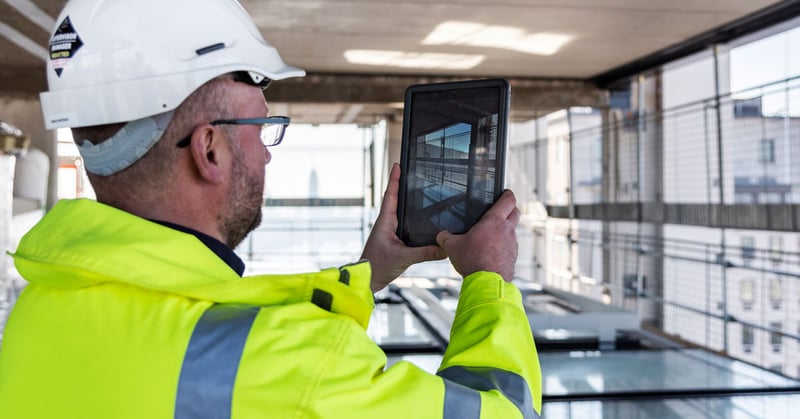
Your inspection schedule is packed. You're spending hours each day just driving between sites. And contractors keep calling asking when you'll arrive.
Building departments nationwide are facing the same challenge. Some are experimenting with Remote Video Inspections (RVI) to see if eliminating travel time can help their teams keep up.
Why modern RVI is different
If you've dismissed remote inspections before, you're not alone. William H. (Bill) Hudson, CBO, MCP, SAFEbuilt's Director of Remote Inspections * with 30 years of experience, was deeply skeptical.
Hudson had seen the problems with early virtual inspection methods — FaceTime calls with no accountability, photos that could've been taken anywhere, and no way to verify location or create timestamped records.
What changed his mind? Modern RVI includes three features that older methods lacked:
- Geolocation verification: Proves the inspector was at the right address with precise latitude and longitude
- Timestamping: Creates an audit trail for every photo taken during the inspection
- Unlimited photo documentation: Inspectors can capture 400+ images showing exactly what they reviewed
The result is a geolocated PDF report that includes far more detail than a traditional inspection signature and a few photos.
"I didn't trust virtual inspections. I'd seen FaceTime calls and photos clearly taken at the wrong address. RVI changed that — the geolocation, timestamping, and photo documentation make it more thorough than traditional inspections."
— Bill Hudson, Master Code Professional, 30 years of inspection experience
3 ways RVI speeds up inspections
1. Eliminate travel time completely
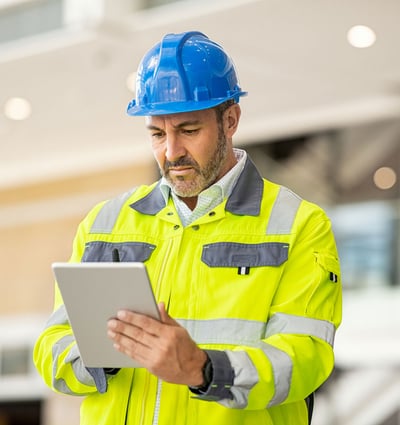 The most obvious change: inspectors aren't spending hours in their trucks.
Instead, they work from the office with live video feeds and approved plans on screen. They complete one inspection, then start the next — without driving across town.
Cities report that hours previously spent in traffic now go toward completing more inspections.
2. Schedule at convenient times
Traditional inspections happen when the inspector arrives. With RVI, cities can schedule exact times.
A parent who can only be home from 4:15-5:00? Cities using RVI can accommodate that.
"If you've got a working parent that can only be home between 4:15 and 5:00, we can schedule the RVI for that exact time," Hudson explains. "No one's losing half a day waiting."
The trade-off: this requires more administrative coordination upfront to manage the schedule.
3. Bundle multiple inspections in one visit
This is where RVI gets interesting: one person on-site with a camera while multiple certified inspectors review different systems remotely.
For example:
- Building inspector checks footings
- Electrical inspector verifies grounding
- Plumbing inspector reviews underground connections
Each inspector directs the camera, takes their own photos, and signs off independently.
After a storm triggers hundreds of permits, this approach helps cities process inspections faster. But it requires good communication between inspectors and careful coordination of who's reviewing what. Please note that multiple inspections are available only in certain jurisdictions, depending on city ordinances and state legislation.
The quality control question
Most building officials ask: How do I know it's thorough if I'm not physically there?
 Cities using RVI address this through role definitions:
- The host is the certified inspector who controls the inspection — directing the camera, reviewing details on a large screen, and signing off.
- The guest operates the camera on-site. For simple work like pool finals, this might be the homeowner. For complex inspections, cities typically require a trained professional.
Anyone can choose not to use RVI. If an elected official, director, property owner, contractor, or inspector prefers a traditional inspection for any reason, it will be done in person.
Where RVI tends to work (and where it doesn't)
Cities using RVI typically start with:
- Simple finals (pools, fences, water heaters, a/c)
- Re-inspections after corrections
- Time-sensitive work (footings before a concrete pour)
- Post-storm damage assessments when inspectors are overwhelmed*
Where cities are more cautious
Complex structural inspections, first-time builds where tactile assessment matters, or situations where the inspector needs to physically test components.
Match inspection complexity to camera operator expertise and inspection type.
Learning more about implementation
Cities considering RVI typically want to understand: How do you train staff? Which inspections qualify? What does the actual process look like?
Video Inspections: 3 Ways To Speed Inspections walks through real implementation examples and shows actual RVI reports from cities using the approach.

* Disclaimer: Remote Video Inspection (RVI) services are available only in certain jurisdictions and may be limited or restricted based on applicable municipal, county, and state ordinances, codes, and legislation, which vary by location. RVI may also be limited to specific inspection types as permitted by law. Availability is not guaranteed. Please consult a SAFEbuilt representative to confirm whether RVI services are authorized in your jurisdiction and for the applicable inspection types.