

Your building department is short two inspectors, permit applications are stacking up, and the next budget cycle is months away. Meanwhile, residents and developers are asking why reviews take so long. For municipal leaders in this position, building department services outsourcing is worth a closer look.
This article breaks down what building department outsourcing actually involves, how it differs from traditional staffing, and what benefits and risks you should weigh before making a decision
Key takeaways: building department outsourcing
- Building department outsourcing means contracting qualified professionals for plan review, inspections, code enforcement, and permit administration.
- Support can cover selected assignments or broader department management.
- Oversight, approval authority, and communication responsibilities need to be clearly defined.
- Additional capacity can help address staffing gaps, but turnaround and cost depend on the scope and agreement.
- Evaluating your community's capacity gaps, compliance needs, and budget constraints helps determine the right service model.
What is building department outsourcing?
Building department outsourcing is the practice of contracting an external partner to deliver some or all of the functions typically handled by a municipal building department. Those functions include plan review, building inspections, code enforcement, permit processing, and the work of building officials.
Unlike hiring temporary staff through an agency, outsourcing building department services involves engaging a professional services firm that brings its own certified inspectors, plan reviewers, and operational systems. Your municipality still sets the standards and retains authority over code adoption and enforcement priorities.
The outsourcing model is not new to government. Municipalities across the country have used it for decades to address staffing shortages, seasonal demand spikes, and the challenge of recruiting certified professionals in a competitive labor market.
How does outsourced building department staffing differ from in-house?
With an in-house building department, your municipality hires, trains, and manages all staff directly. You carry the full cost of salaries, benefits, certifications, and continuing education. When workload drops, you still carry those fixed costs. When it surges, you may not have the capacity to respond quickly.
An outsourced model shifts the staffing, training, and certification burden to the service provider. The provider matches inspection and review capacity to your actual permit volume. During a construction boom, they scale up. During a slow period, you are not paying for idle staff.
The key distinction is flexibility. Outsourcing gives you access to a bench of certified professionals without the overhead of maintaining that bench full-time.
What are the benefits of outsourcing building department services?
Faster permit turnaround and reduced backlogs
Long review queues delay construction starts, frustrate developers, and create lost permit revenue for your municipality. An outsourced partner can deploy additional plan reviewers and inspectors to clear backlogs and maintain consistent turnaround times. SAFEbuilt's custom-built building department services are structured to address exactly this type of capacity gap.
Access to certified, cross-trained professionals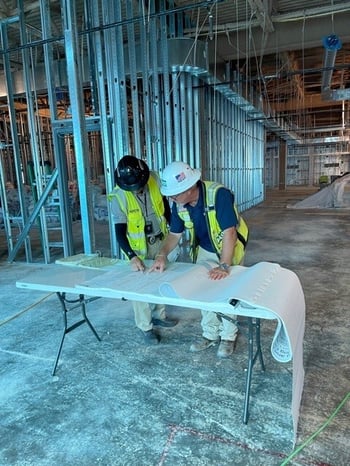
Recruiting and retaining ICC-certified inspectors and plan reviewers is a challenge in many markets. An outsourced provider maintains a network of credentialed staff who are already trained and ready to work within your jurisdiction's code requirements.
Cost predictability and budget alignment
Outsourcing converts what is often a fixed personnel cost into a variable cost aligned with actual service demand. You pay for the building department capacity you use.
According to the Government Finance Officers Association (GFOA), governments should carefully analyze all aspects of a service delivery option, including service quality, costs, and required transition activities before changing service delivery methods.
Maintained local control and compliance
A common concern is that outsourcing means losing control. In practice, your municipality still adopts and enforces its own codes. The outsourced partner works within your established processes, uses your permitting systems, and follows your priorities. You set the standards. They execute the work.
What are the risks of outsourcing building department services?
Transition and onboarding complexity

Shifting from an in-house department to an outsourced model requires planning. Your team needs to define service expectations, establish communication protocols, and ensure the provider understands your local codes and community context. SAFEbuilt addresses this through a structured onboarding process designed to move from contract signing to first inspection efficiently.
Perceived loss of community connection
Residents and elected officials sometimes worry that an outside firm will not understand local needs. This concern is valid and should be addressed during vendor selection. Look for a partner that assigns staff who learn your community's development patterns, attend local meetings, and build relationships with contractors and residents.
Contract scope and performance monitoring
Any outsourced service requires clear performance expectations and regular review. Without defined service levels, reporting schedules, and escalation protocols, accountability gaps can develop. A strong contract should specify turnaround times, inspection scheduling windows, and quality benchmarks.
When should a municipality consider outsourcing?
Not every community needs to outsource its entire building department. But certain conditions make it especially worth evaluating. If your department is experiencing persistent staffing gaps that affect permit turnaround, outsourcing specific functions may be the most practical path forward.
Other trigger points include upcoming retirements of key staff, a surge in development applications, budget constraints that prevent new hires, or difficulty recruiting certified professionals. In these situations, engaging a partner like SAFEbuilt provides certified capacity without the delays of a full hiring cycle.
Some municipalities also explore outsourcing after a natural disaster, when code enforcement and inspection demand spikes far beyond normal levels.
How to evaluate an outsourced building department partner
Choosing the right partner starts with understanding your specific capacity gaps. Here are the key criteria to evaluate.
- Certifications and credentials: Confirm the provider's staff holds current ICC and state-required certifications for the inspection and review types you need.
- Local code knowledge: The provider should demonstrate familiarity with your state's adopted codes and your municipality's local amendments.
- Technology compatibility: Your partner should integrate with your existing permitting platform and electronic plan review workflows.
- Scalability: Ask how quickly the provider can add staff during peak periods or scale back during slower months.
- References from similar jurisdictions: Request references from communities of a similar size, geographic region, and development profile.
How to make the right outsourcing decision for your community
Outsourcing building department services is not an all-or-nothing decision. Many municipalities start with supplemental support for plan review or inspections and expand as needs evolve. The right approach depends on your community's development activity, budget, and staffing realities.
What matters most is that your residents continue to receive timely, code-compliant service. If your current staffing model creates delays that affect safety, development timelines, or public trust, it may be time to explore what a professional services partner can offer.
SAFEbuilt works alongside building departments across the country, providing the certified staff and operational support that keeps communities safe and projects moving forward.
FAQs about building department outsourcing
What services can a municipality outsource to a building department partner?
Municipalities can outsource plan review, building inspections, permit processing, code enforcement, and building official services. SAFEbuilt provides all of these functions, staffed by certified professionals who work within your established codes and processes.
Does outsourcing mean losing control of my building department?
No. Your municipality retains authority over code adoption, enforcement priorities, and departmental policies. The outsourced partner operates within your framework. SAFEbuilt positions itself as a professional extension of your team, not a replacement for your oversight.
How quickly can an outsourced provider start delivering services?
Timelines vary, but many providers can begin within weeks of contract execution. SAFEbuilt's structured onboarding process is designed to move from agreement to first inspection as efficiently as possible, with minimal disruption to ongoing operations.
Is building department outsourcing only for small municipalities?
No. Communities of all sizes use outsourced building department services. Smaller jurisdictions may outsource full department management, while larger cities often use supplemental support for peak periods or specialized review types. SAFEbuilt supports over 2,000 clients nationwide, ranging from small towns to major metropolitan areas.
How do I ensure quality when using an outsourced building department provider?
Define clear service-level expectations in your contract, including turnaround times, inspection scheduling standards, and reporting requirements. Regular performance reviews and open communication with your provider are essential for maintaining accountability and service quality.